Association for the Promotion of New Music
c/o Subito Music Corporation 60 Depot Street
Verona, NJ 07044
Follow Us

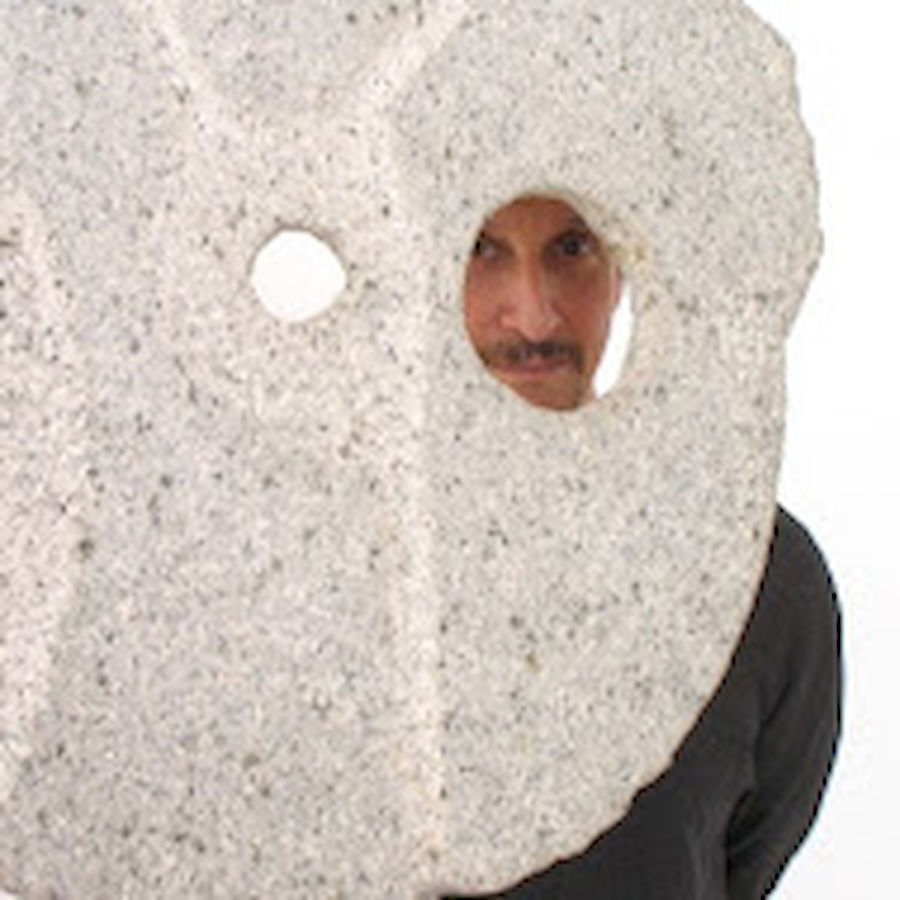
David Glaser
(1952)

About

David Glaser was born in Manhattan in 1952 and studied at Hunter College (BA), Queens College (MA) and Columbia University (DMA) where he worked with Mario Davidovsky, George Edwards, Martin Boykan and Jack Beeson. In 2007 he was awarded a Fromm Foundation commission to compose a piece for Parthenia. He has also received an Academy Award in Music from the American Academy of Arts and Letters, an Alice M. Ditson Grant, a CAP Grant and a Margaret Fairbank Jory Copying Assistance Grant from the American Music Center, the Dr. Boris and Eda Rapoport Prize in Composition at Columbia University and Fellowships from the MacDowell Colony and Wellesley Composer Conference. He has been composer-in-residence at the NewMusic@ECU Festival at East Carolina University and at the Utah Arts Festival in Salt Lake City, Utah. He is currently on the board of the United States section of the League of Composers/ISCM and of Parthenia, a consort of viols.

Glaser’s CD Kinesis has been released on Albany Records (TROY 1343).

American Academy of Arts and Letters describes his work as “…subtly potent.”

His music has been commissioned by the NewMusic@ECU festival for Christopher Grymes, Parthenia – a Consort of Viols, the New York New Music Ensemble, Judith Kellock, Susan Narucki, Linda Larson, Elizabeth Farnum, the Cygnus Ensemble, the Anderson-Fader Guitar Duo, the Peconic Chamber Orchestra, the New Jersey Percussion Ensemble, No Exit New Music Ensemble, Da Capo Chamber Players, and Glaux, the new music ensemble of Temple University.

He is Professor Emeritus at Stern College of Yeshiva University in New York.

Works List

Title Year Instrumentation Extras Link
Concertino No. 3 for Viola and Chamber Ensemble (2025) 2025 viola and chamber ensemble n/a
Moonset No. 2 2006 Soprano and Piano n/a
String Quartet No. 3 (2014) n/a
David Glaser

String Quartet No. 3 (2014)

This ten minute piece, a work in one movement, is divided into four sections. These parts are distinguished by changes of tempo, register and thematic idea. The opening, marked “Crystalline, icy” starts with the high register, and a generally slow tempo. It is followed by faster music that makes use of tremolos. In homage to someone who wonders why I write so much “spooky” music this section is marked “Playfully ominous”. A cello solo dominates the third section which leads seamlessly into a closing which is characterized by rapid changes in gesture and motive.

n/a
All One Breath 2015 Mezzo-soprano, clarinet, piano & string quartet
David Glaser

All One Breath

This piece revisits an ensemble that I composed for in 2012. The combination of clarinet, piano and string quartet, which I first encountered in Copland’s Sextet is one that I found particularly satisfying to write for. In the context of a work that includes voice, it alludes to Baroque musical practice, suggesting a continuo group, the piano and cello, a ripieno, the violins and viola and an obbligato instrument, the clarinet.

The defining sound palette of All One Breath is created by the use of extreme registers in the piano and frequent passages of pizzicato writing. Both the singer and clarinet participate in the latter in ways referred to later. This defining color (or tinto as Verdi would describe it) is often used to help create the formal structure of the piece.

The first of the three large sections of this piece is a vocalise preceded by a brief introduction. The mezzo-soprano chooses most of the syllables for herself, allowing her some freedom to either blend into or stand out from the ensemble. The middle section (marked Giocoso ma sinistro) is a scherzo that indulges in much word-painting on Ecclesiastes 7:5. This section is dominated by dry sounds including pizzicati, whiten the strings with the wood of the bow and clapping. The final, and longest section of the work is a meditation on Ecclesiastes 3:16 - 22.

All One Breath is about eleven minutes long.

Text:

Ecclesiastes 7:6

6 For as the crackling of thorns under a pot, so is the laughter of the fool: this also is vanity.

Ecclesiastes 3:16 - 22

16 And moreover I saw under the sun the place of judgment, that wickedness was there; and the place of righteousness, that iniquity was there.

17 I said in mine heart, God shall judge the righteous and the wicked: for there is a time there for every purpose and for every work.

18 I said in mine heart concerning the estate of the sons of men, that God might manifest them, and that they might see that they themselves are beasts.

19 For that which befalleth the sons of men befalleth beasts; even one thing befalleth them: as the one dieth, so dieth the other; yea, they have all one breath; so that a man hath no preeminence above a beast: for all is vanity.

20 All go unto one place; all are of the dust, and all turn to dust again.

21 Who knoweth the spirit of man that goeth upward, and the spirit of the beast that goeth downward to the earth?

22 Wherefore I perceive that there is nothing better, than that a man should rejoice in his own works; for that is his portion: for who shall bring him to see what shall be after him?

n/a
Bright Smoke (2015) for solo percussion n/a Solo percussion n/a
Concertino No. 1 for Guitar and Chamber Ensemble 2016 solo guitar, fl/picc, afl, cl, perc - tgl, susp. cym, tpl.bl, Cowbell, tom-t, tamb, vib, vla, vcl, db
David Glaser

Concertino No. 1 for Guitar and Chamber Ensemble

My continued interest in music of the Renaissance and Baroque has an ongoing influence on my own work. As suggested by the title, in this case it is the compact formal design and chamber-sized ensembles favored by Bach, Handel and Corelli in their concertos.

Unlike my models, this is a work in one continuous movement with shifting moods; it is by turns jaunty, contemplative, dramatic and somber. The piece moves fluidly between ensemble passages and sections where trios and quartets of various combinations are featured.

n/a
Carmina for soprano & two Guitars (2016 rev. 2026) n/a S, 2 gtr
David Glaser

Carmina for soprano & two Guitars (2016 rev. 2026)

Carmina is my second project based on texts by Catullus. I was introduced to his works by a friend when we were both undergraduates. Of course, it was the scandalous aspects of his poetry that first caught my adolescent attention. It was shocking: People in that cool, pure white marble world of ancient Rome actually used dirty words! Since then, I have seen frescoes from Pompeii, and also have come to appreciate the lyrical aspects of Catullus’ poetry.

Carmina is a setting of three texts, one in the original, and two in very quirky, wonderful translations by Paul and Celia Zukofsky. Their version reconciles the need to put the words into English while retaining as far as possible the sound of the Latin. The Zukofsky translation suggests to me a cubist version of Catullus; the meaning is there but diffracted and broken into shards. The vocal line and accompaniments of these movements (I think of both as scherzos) reflects that playful aspect of the Zukofskys’ work. It also suggested a freer treatment of the voice than I have used in the past.

Carmen VIII, set in the original Latin, is a contrast to the other texts. The vocal lines and accompaniment, while longer and more lyrical, are influenced by the greater freedom I found in setting the shorter, racier poems.

Carmina is about 8 minutes long.

I would like to thank Vox & Plux for requesting the piece, and for their elegant, witty, and precise playing. Thank you for your ongoing championing of my music.

All Louis and Celia Zukofsky materials copyright © Musical Observations, Inc. Used by permission.

Texts for Carmina

13

Canapés, my Fabullus, at home any

day now, if the gods don’t want you to diet –

say that you come here bountifully laden

with canapés, not without cither girl, with

wine and salted with, cacophonous laughter,

if you come to us se, magnanimously ours,

you’ll eat canapés: need Catullus tell you

his little sack of plenty’s Arachne’s web.

In return accept love’s order of merit,

what is more suave or invested with elegance:

as for unguent, my boy, there will be my girl’s –

her donors the Venuses and the Cupids –

when you smell a whole whiff of it you’ll beg the

gods to fancy you, all, Fabullus, all nose.

16

Piping, beaus, I’ll go whoosh and I’ll rumble you

pathetic Aurelius and catamount Furius,

who mix my versicles with your poor tasties –

the sound is a mollycoddle’s, I’m not up

to par for chasteness. But the pious poet

is chaste, his versicles not nailed to his need,

quick to themselves with no lack of decorum,

if the sound models not quite pure for pudency

what incitement it carries passes into

now I won’t say hairless boys’, but such hoary

necks as endure not quite up to fee lumbar.

Milling thousands of kisses are base or make

Me out some mare of a male – you impute that?

Piping, beaus, I’ll go whoosh and I’ll rumble you.

Trans. Louis and Celia Zukofsky

All Louis and Celia Zukofsky materials copyright © Musical Observations, Inc. Used by permission.

Carmen VIII

Miser Catulle, desinas ineptire,

et quod vides perisse perditum ducas.

Fulsere quondam candidi tibi soles,

cum ventitabas quo puella ducebat

amata nobis quantum amabitur nulla.

Ibi illa multa cum iocosa fiebant,

quae tu volebas nec puella nolebat,

fulsere vere candidi tibi soles.

Nunc iam illa non vult: tu quoque impotens noli,

nec quae fugit sectare, nec miser vive,

sed obstinata mente perfer, obdura.

Vale puella, iam Catullus obdurat,

nec te requiret nec rogabit invitam.

At tu dolebis, cum rogaberis nulla.

Scelesta, uae te, quae tibi manet uita?

Quis nunc te adibit? cui videberis bella?

Quem nunc amabis? Cuius esse diceris?

Quem basiabis? Cui labella mordebis?

At tu, Catulle, destinatus obdura.

Poor Catullus, you must stop being silly,

and count as lost what you see is lost.

Once the sun shone bright for you,

when you would go whither your sweetheart led,

she who was loved by me as none will ever be loved.

Then there took place those many jolly scenes

which you desired nor did your sweetheart not desire.

Truly the sun shone bright for you.

Now she desires no more: do you too, weakling, not desire;

and do not chase her who flees, nor live in unhappiness,

but harden your heart, endure and stand fast.

Goodbye, sweetheart. Catullus now stands fast:

he will not look for you or court you against your will.

But you will be sorry when you are not courted at all.

Wretch, pity on you! What life lies in store for you!

Who will come to you now? Who will think you pretty?

Whom will you love now? Who will people say you are?

Whom will you kiss? Whose lips will you bite?

But you, Catullus, be resolute and stand fast.

n/a
Flâneur (2020) for solo clarinet 2020 Clarinet solo
David Glaser

Flâneur (2020) for solo clarinet

Flâneur (2020) for solo clarinet

Written at the request of Christopher Grymes, Flâneur is a work in five movements for solo clarinet. His challenge to me was to write follow the model of Stravinsky and write a set of pieces each of which would fit on one page. Full disclosure – there was a bit of manipulation of staff size and layout in order to meet his requirement.

The movements are part etude and part character pieces in the tradition of French Baroque composers like François Couperin and Marin Marais.

The titles, which give some indication of the affect of the movements are:

I – Twilight

II – Dragonfly

III – Le Flâneur

IV – Lagoon

V – Dawn

n/a
Cantata - Psalm Civ 1989 soprano, ob d’am, b cl, tpt, 2perc, gtr, vn, va, cb n/a
Night Waves 1995 percussion quartet n/a
Of Twilight 2011 soprano, vn, bcl, pft, perc
David Glaser

Of Twilight

Of Twilight provided me the opportunity to pay tribute to the works of two artists whom I admire.

I have long been fascinated by Joseph Cornell’s box constructions. Within a confined space his juxtapositions of readymade objects and collage create an intimate universe, rich with associations. Of Twilight is my response to his works, creating musical landscapes - auditory suggestions of Cornell’s tableaux. The texts are chosen from Charles Simic’s Dimestore Alchemy, a series of evocative poems about Cornell’s life and works. I have used Simic’s poetry before and was very pleased to discover that he and I shared a love for Cornell.

As a rule I don’t read artists biographies, but I have learned enough about Cornell to know that he was shopping at the Woolworth’s on Main Street and Roosevelt Avenue in Flushing in the same years that I was and I would like to think that perhaps we even sat next to each other on the Number Seven train to Manhattan.

The piece, scored for soprano, violin, bass-clarinet, percussion and piano, is in five sections, with the poem Matchbox with a Fly in It used as a framing device, the box that holds the other three poems.

Of Twilight was written for Susan Narucki. My thanks to her and the members of the New York New Music Ensemble for their enthusiastic support of my work.

n/a
Polaris 2012 cl, pno, string quartet n/a
Predella 2010 viola da gamba quartet
David Glaser

Predella

(Fromm Foundation Commission)

n/a
Sirius 2012 vn, va, vc, pft
David Glaser

Sirius

Sirius is the second piece of a projected set of three works for various combinations of string instruments and piano. It was preceded by Polaris (a sextet that included clarinet along with the strings and piano) and will be followed by a piece for cello and piano.

The thread that ties these works together is a conscious choice to broaden my compositional palette by rethinking the way I handle certain elements in order to make more overtly dramatic music. Chords are more widely spaced and extreme registers are featured. The melodic lines have wider arcs and use larger leaps than I have in earlier pieces.

Structure is articulated by the use of sub-groups of the instruments as well as by changes in speed, gesture and density of sound. One element new to Sirius is that the string parts reflect my recent interest in the fantasy, a genre of Elizabethan viol consort music that alternates polyphonic passages with homophonic sections.

Sirius in one movement of about 10 minutes duration.

n/a
Stray Light n/a soprano, fl, cl/b cl, vn, vc, pno n/a
String Quartet 1994 n/a
String Quartet No.2 2005
David Glaser

String Quartet No.2

After several years of writing pieces for mixed ensembles whose members had very different sonic profiles and, therefore difficulty in creating a balanced, blended ensemble, it was both a relief and something of a challenge to approach writing for a medium whose members blend so easily.

The structure of the piece is created by the transition from long sustained notes, lyrical counterpoint among several instruments, solo versus chordal passages that involve all four members of the quartet and use of pizzicati and tremolos.

String Quartet No. 2 is a work in one movement of about 12 minutes duration.

n/a
Tableaux 1984 solo violoncello n/a
The Speech Of Dreams 1988 picc/fl/afl, ob/corA, cl/bcl, bn, hn, tpt, trbn, 2 perc, vn, va, vlc, db n/a
Apparitions 2005 chamber orchestra n/a
Aurora 2010 fl, cl, vl, vlc, pft
David Glaser

Aurora

Most of my recent chamber music has been shaped by my interest in finding the common timbral or sonic ground among a group of diverse instruments. But in Aurora I focused more on creating a large overall structure that would grow organically from the opening materials.

The piece falls into three large sections, the first of which is the most complex; in it smaller sections overlap and reappear. The middle and last parts are more uniform and are distinguished from each other by their tempi. Solos, duos and trios drawn from the quintet further articulate the larger sections.

Aurora is approximately ten minutes long.

n/a
Catalyst 2007 fl, cl, vc, perc
David Glaser

Catalyst

Catalyst (2007)

Early in 2006, Jayn Rosenfeld asked me to write a fanfare to open this program, the second of the New York New Music Ensemble's 31st season.

The idea of writing a fanfare proved to be a particular challenge as my music has always been relatively introspective. I decided to approach the project as an exercise in writing a piece that functions as a fanfare while also remaining true to my own essentially introverted nature.

To that end, I developed a group of melodic gestures, rhythmic patterns, dynamic shapes, and embellishments commonly associated with fanfares. The work opens with rapid repeated notes at a soft dynamic level, creating a feeling of anticipation and perhaps urgency. The figures are stated in precise rhythmic unison in contrasting timbres of the cello and clarinet, playing in the dark chalumeau register.

Piccolo and vibraphone make sustained entrances. Soon these varying voices are trading statements and developing independent ideas. Flute replaces clarinet for a time, and the instruments continue the discussion in pairs and threes, sometimes in opposing pairs -- ebbing and flowing, with added color from drums, vibes, and temple blocks. Textures thin out toward the conclusion, which is terse and emphatic.

n/a
Catullus Dreams 1989 soprano, bcl, tpt, hp, gtr, vln, vla, db, perc
David Glaser

Catullus Dreams

Catullus Dreams was written for Linda Larson and Sequitur at the request of Harold Meltzer. More than just a setting of the poetry, it is a fictionalized psychological portrait of the Catullus. While writing the piece I imagined him as an obsessive personality, with just a touch of Tourette’s syndrome. At least that was my excuse for setting the texts used in movements II and IV, scherzos separating the more lyrical and contemplative sections of the piece. The middle movement was the result of a suggestion by Ms. Larson that at some point I use the voice as an obbligato to the instruments. That inspired a movement that sets fragments from various poems woven into the instrumental texture.

I decided to use the original Latin rather than English translations so that I could avoid thinking about the texts and just focus on the music. However, the pull of the words was too great and there is much word-painting, some obvious and some obscure, in the piece.

n/a
Chiaroscuro 2003 alto sax, vla, pno n/a
Closely By The Sky 1996 Soprano & Violoncello n/a
Concerto for Clarinet and Chamber Orchestra 2008 solo cl, ob, bn, tpt, trbn, tuba, pft, perc, stgs
David Glaser

Concerto for Clarinet and Chamber Orchestra

In 2006 I met Chris Grymes here at the NewMusic@ECU Festival when he and Louise Toppin performed Moonset No. 1. I was impressed by his outstanding performance and he was enthusiastic about my music. At that time we agreed to work together again. The Concerto for Orchestra is the result of that encounter.

Various moods are explored in this piece which is by turns mysterious, playful and serene. I was sparing in the use of the entire orchestra and took advantage of the large ensemble to select different combinations of instruments for each of the movements. The one group that returns several times is the clarinet with piano and percussion.

A brief description of the first third of the concerto may help guide your listening. Low strings, piano and percussion open the piece with other instruments added gradually, mostly in the low registers. A few bright highlights are provided by the piano and vibraphone. The clarinet enters into the gradually enlarging ensemble and eventually assumes its role as soloist. After a brief dialog with the entire orchestra, we arrive at the first of the two cadenzas.

The Concerto is a work of 15 minutes duration whose sections are performed without pause. In addition to the clarinet, the piece is scored for oboe, bassoon, trumpet, trombone, tuba, percussion, piano and strings.

n/a
Convergence 2000 fl, guitar, vn,vc n/a
Dialogues 1986 clarinet and violoncello n/a
Fantasia 1979 solo viola n/a
Fantazy 2008 tenor viola da gamba and bass viola da gamba n/a
I Make A Note 2012 fl, ob, 2 gtrs, vn, vlc n/a
Kinesis 2008 guitar and string quartet
David Glaser

Kinesis

As with most of my recent music, the structure of Kinesis is shaped by the particular sonic characteristics of the ensemble for which it was written.

I usually try to find the common ground among the instruments in order to create a unified ensemble. There are times in this piece where the members of the quartet defer to the guitar, using various types of pizzicato, or where a gesture is shared by all the instruments. But as often as not the quartet and guitar are treated as distinct entities.

Kinesis is organized in three movements separated by two interludes.

The first movement starts with the guitar alone. Towards the end of its solo it shepherds in the other members of the ensemble.

The first of the two brief interludes is scored for the quartet. It starts with dramatic gestures, calms down and then leads immediately into the second movement which starts with quiet tremolos for the quartet and eventually the guitar. These tremolos are transformed at the end of the movement into trills.

The second interlude is a contemplative solo for the guitar.

The guitar starts the last movement with rolled chords, a technique imitated later by the cello and viola.

Kinesis is another piece in a series of works taking its inspiration (and title) from art by Linda Plotkin. All of her pieces in this series contain a central element spiraling up from the bottom and folding over itself, creating a recurring vocabulary of gestural shapes and rhythms. My work is a sonic analog of these gestures; I have created motives that appear in all three movements, lending coherence to this multi-movement work.

n/a
Le Carnet Rouge 2004 two guitars n/a
Moonset No. 1 2003 soprano and clarinet n/a
Morning Star 1979 soprano, fl, ob, bsn, pft, vn, va, vlc n/a
Predella 2010 viola da gamba quartet
David Glaser

Predella

(Fromm Foundation Commission)

n/a
n/a n/a
Stray Light n/a soprano, fl, cl/b cl, vn, vc, pno n/a
Title Year Instrumentation Extras Link

Video

David Glaser: Aphorisms

David Glaser's just a minute

Momenta Quartet - String Quartet No. 4 (2016) [David Glaser]

David Glaser - Concertino No. 1 for Guitar and Chamber Ensemble

David Glaser - Concertino No. 2 for Clarinet and Chamber Ensemble - Yeshiva University Museum 2019

    Upcoming & Recent Events

    Audio

    Music by David Glaser

    1. Catalyst New York New Music Ensemble 9:50
    2. Convergence Cygnus Ensemble 10:03
    3. Moonset No. 1 Linda Larson, soprano, Richard MacDowell, clarinet 8:45
    4. Gold Vermillion DaCapo Chamber Players 12:36
    5. Kinesis Momenta String Quartet, Oren Fader, guitar 6:01
    6. Kinesis - Interlude I Momenta String Quartet, Oren Fader, guitar 0:52
    7. Kinesis II Momenta String Quartet, Oren Fader, guitar 3:40
    8. Kinesis - Interlude II Momenta String Quartet, Oren Fader, guitar 1:07
    9. Kinesis III Momenta String Quartet, Oren Fader, guitar 4:21
    10. String Quartet No. 4 Live performance 14:50